
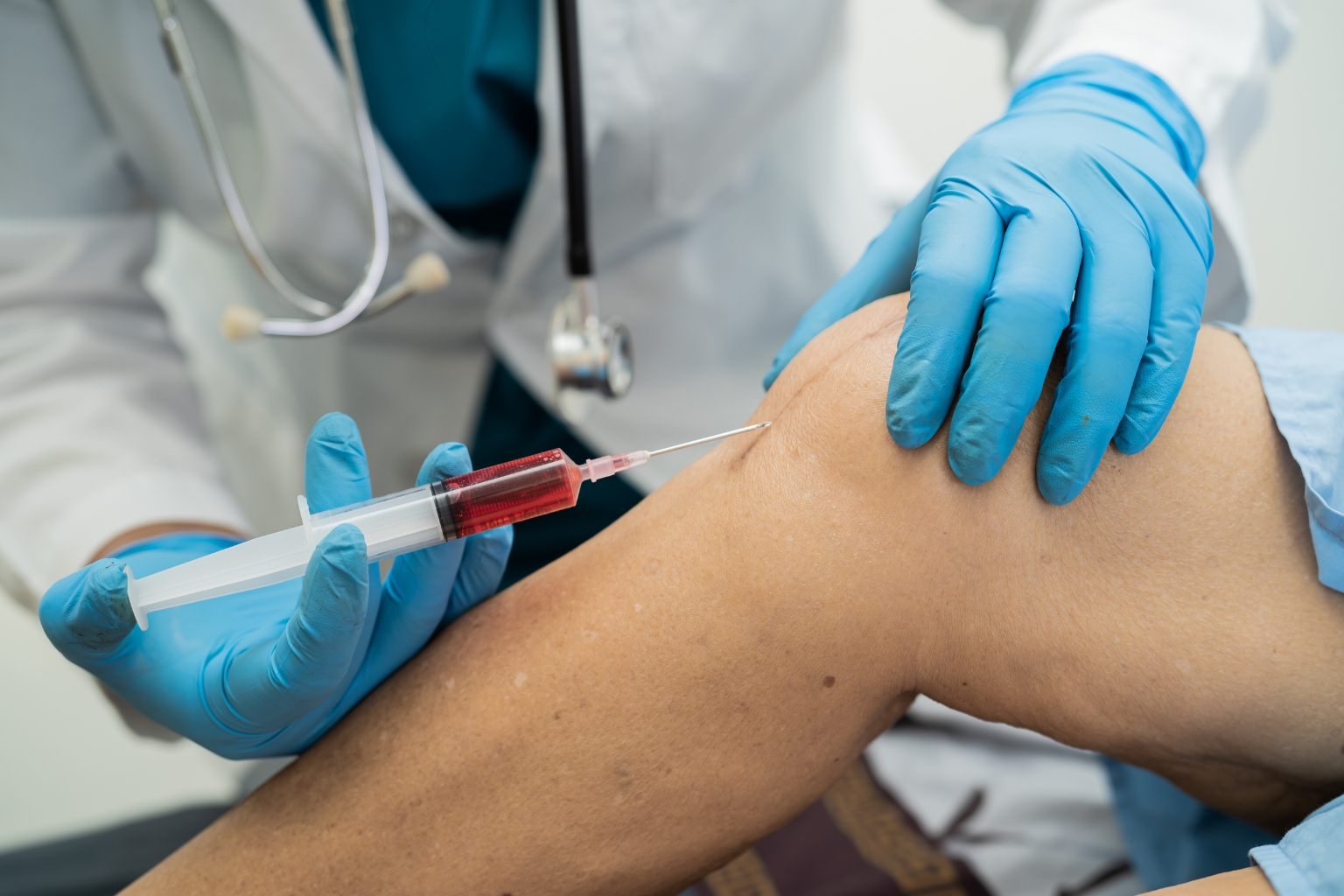
You have tried rest. You have tried anti-inflammatories. You have done the cortisone shots, maybe more than once, maybe more than a few times. And the pain always comes back. Sometimes within weeks. Sometimes it comes back worse than before.
If this describes your experience with chronic joint pain, you are not alone. Millions of Americans live with persistent discomfort in their knees, shoulders, hips, elbows, or lower backs, cycling through the same interventions and getting diminishing returns each time.
The problem is not you. The problem is that the most commonly prescribed treatments for joint pain are designed to manage symptoms, not repair the underlying damage. When the treatment wears off, the damage is still there. And in some cases, the treatment itself has made things worse.
There is a better approach, one designed to work with your body’s healing biology rather than against it.
The Real Problem with Cortisone
Cortisone injections work by suppressing the inflammatory response in and around a joint. In the short term, this can be dramatically effective. Pain decreases, mobility improves, and the relief feels real. For acute injuries or temporary flares, cortisone can be genuinely useful.
The trouble begins with repeated use. Multiple peer-reviewed studies have demonstrated that frequent cortisone injections can accelerate cartilage breakdown, weaken surrounding tendons, and in some cases, accelerate the very degeneration they are meant to slow. Research published in the Journal of the American Medical Association found that patients receiving cortisone injections for knee osteoarthritis experienced significantly greater cartilage loss over two years compared to a placebo group.
What this means clinically: every cortisone injection might buy you a few weeks or months of relief while quietly advancing the damage that will eventually lead to more aggressive intervention. It is borrowing time at a cost your body pays later.
What PRP Does Differently
Platelet-Rich Plasma (PRP) therapy takes a fundamentally different approach. Rather than suppressing your body’s inflammatory response, PRP introduces a concentrated form of your body’s own healing agents directly to the site of damage.
Here is the process: we draw a small amount of your blood and spin it in a centrifuge. This separates the blood into its components and concentrates the platelets, the cells responsible for delivering growth factors to injury sites. That platelet-rich plasma is then injected precisely into the damaged joint tissue, guided by ultrasound when targeting deep structures like the hip or shoulder.
The growth factors released by those concentrated platelets, including platelet-derived growth factor (PDGF), transforming growth factor-beta (TGF-b), vascular endothelial growth factor (VEGF), and insulin-like growth factor (IGF-1), signal the body to increase collagen production, improve blood supply to the area, recruit reparative cells to the injury site, and modulate inflammation in a way that supports healing rather than simply suppressing symptoms.
The result is not temporary relief followed by a return to baseline. It is tissue remodeling: the actual repair and strengthening of the structure that was damaged. Over weeks and months, treated tissue becomes more robust, better vascularized, and more resilient under load.
Which Conditions Respond Well to PRP?
PRP has demonstrated effectiveness across a broad range of musculoskeletal conditions, including:
- Osteoarthritis of the knee, hip, and shoulder
- Rotator cuff tendinitis and partial tears
- Patellar tendinopathy (jumper’s knee)
- Tennis elbow and golfer’s elbow (lateral and medial epicondylitis)
- Plantar fasciitis and Achilles tendinopathy
- Chronic lower back pain related to disc degeneration or facet joint dysfunction
- Ligament sprains and partial tears that have not healed with conventional care
- Peyronie’s disease (for the P-Shot, a related application)
You can read more about our approach to regenerative joint care on our treatment page.
Pairing PRP with BPC-157 Peptide Therapy
For musculoskeletal conditions, we frequently recommend pairing PRP with BPC-157, a synthetic peptide derived from a protective protein found in gastric secretions. BPC-157 has been studied extensively for its remarkable tissue-repair properties, with research suggesting it accelerates tendon-to-bone healing, reduces joint inflammation, promotes angiogenesis (new blood vessel formation) in damaged tissue, and supports gut health, which plays an underappreciated role in systemic inflammation.
In clinical practice, patients who receive BPC-157 alongside PRP often report faster initial recovery and more durable long-term outcomes. The peptide extends the regenerative window that PRP opens, giving the tissue more time and biological support to repair.
Learn more about how peptide therapy is integrated into our regenerative care programs.
Supporting Your Recovery with IV Nutritional Therapy
At Evolve Medical, we take a whole-body view of recovery. Joint degeneration and chronic inflammation are not just local problems. They reflect systemic conditions that benefit from systemic support.
IV nutritional therapy can deliver high-dose anti-inflammatory nutrients, including glutathione, vitamin C, magnesium, and B-complex vitamins, directly into the bloodstream for maximum absorption. Many of our joint pain patients incorporate IV therapy alongside PRP to reduce systemic inflammation, support tissue repair, and accelerate recovery between sessions.
What to Expect from Treatment
A PRP session at Evolve Medical takes approximately 60 to 90 minutes from blood draw to injection. We use ultrasound guidance for precise delivery when treating complex joints like the shoulder, hip, or knee, ensuring the growth factors reach exactly the right tissue.
Most patients experience some soreness at the injection site for two to five days following treatment. This is a normal and expected part of the healing process, one that reflects the inflammatory phase that initiates tissue repair. We provide a detailed post-care protocol and stay in contact with you during recovery.
Improvement is gradual and progressive. Some patients notice a meaningful reduction in pain and improved range of motion within two to four weeks. More significant structural improvement, the deeper tissue remodeling, continues over three to six months as new collagen is laid down and circulation to the area improves.
Frequently Asked Questions
How is PRP different from stem cell therapy?
PRP uses concentrated growth factors from your own blood to stimulate your body’s natural repair response. Stem cell therapy involves the introduction of regenerative cells to the treatment site. Both have applications in joint pain, and in some cases they are used together. Our providers will help determine which approach is most appropriate for your specific condition and severity.
How many PRP treatments will I need?
Most joint conditions respond to a series of two to three injections spaced four to six weeks apart. More advanced degeneration or larger joints may benefit from additional sessions or a maintenance schedule. We reassess after your initial series to determine next steps.
Can I continue my normal activities after treatment?
Most patients return to light daily activity immediately. We recommend avoiding intense physical exertion for five to seven days following an injection to allow the initial inflammatory response to complete without disruption. Your provider will give you specific guidance based on the joint treated and your activity level.
How soon after starting to feel pain should I consider PRP?
Earlier is almost always better. The more tissue that remains intact, the more robust the regenerative response. If you have been managing chronic pain with medications or cortisone shots, we encourage you to schedule a consultation sooner rather than later to explore your options.
Is PRP covered by insurance?
Most insurance plans do not currently cover PRP for joint pain, as it is categorized as a regenerative or investigational procedure by most carriers. We offer transparent pricing and will review all options with you during your consultation.
Ready to Take the Next Step?
Chronic joint pain does not have to be your new normal. At Evolve Medical in Deer Park, NY, our physician-led team offers PRP therapy and comprehensive regenerative care tailored to your specific injury, joint, and lifestyle. The first step is a conversation.
(631) 253-1313